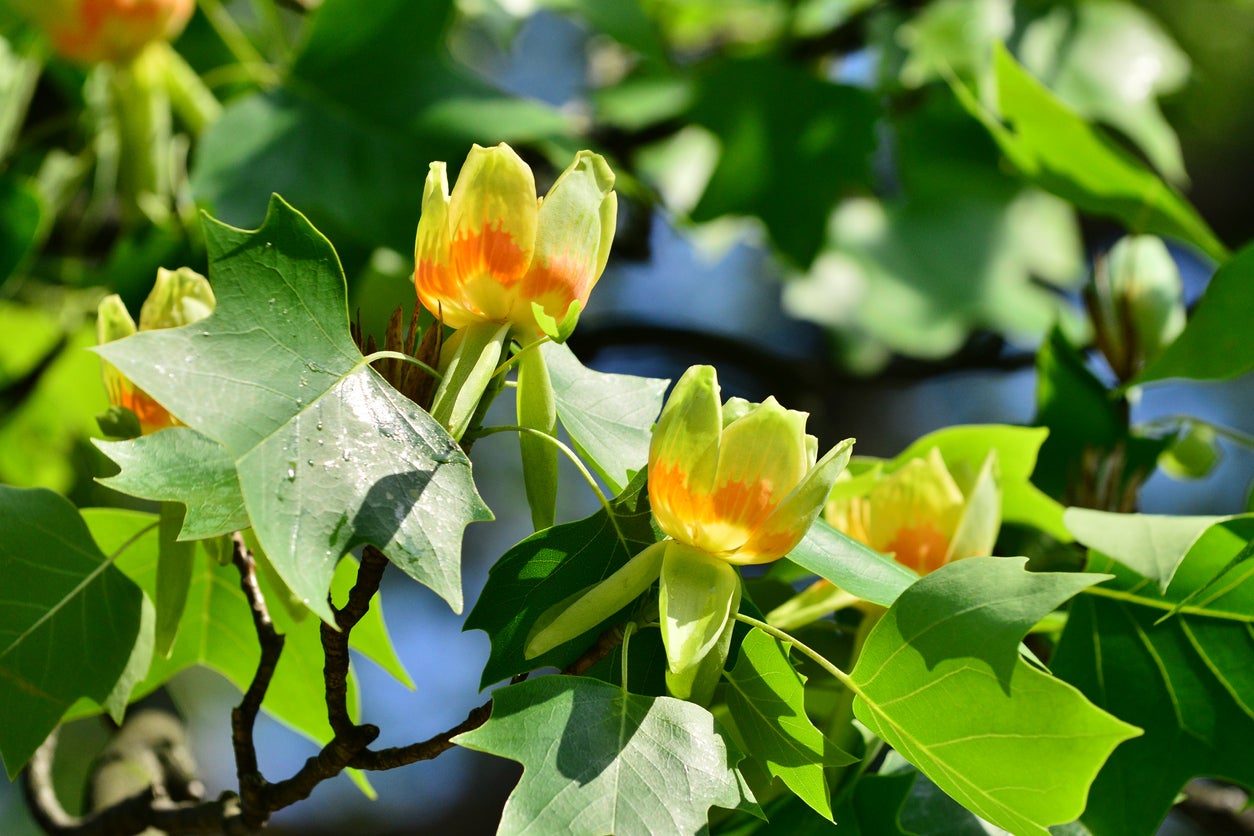
The tulip tree, scientifically known as Liriodendron tulipifera, is a towering deciduous tree native to eastern North America. It’s renowned for its stunning tulip-shaped flowers, which bloom in late spring and early summer. This majestic tree offers a combination of beauty, ecological benefits, and cultural significance.
Physical Characteristics
Height and Spread: The tulip tree is a fast-growing species that can reach impressive heights of 80-120 feet (24-36 meters) with a spread of 40-60 feet (12-18 meters). Its trunk is often straight and columnar, developing a smooth, gray bark that becomes furrowed and ridged with age.
Ecological Benefits
Habitat and Wildlife: The tulip tree provides valuable habitat for a variety of wildlife. Its dense canopy offers shade and protection for birds, squirrels, and other small mammals. The tree’s flowers attract pollinators, such as bees and butterflies.

Cultural Significance
Symbolism: The tulip tree has cultural significance in several ways. It is often associated with spring, renewal, and hope. In some Native American cultures, the tulip tree was considered a sacred tree and was used in ceremonies and rituals.
Planting and Care
Planting: Tulip trees prefer well-drained soil in full sun to partial shade. They can be planted in spring or fall.
In conclusion, the tulip tree is a magnificent and versatile tree that offers a wealth of benefits. Its striking appearance, ecological importance, and cultural significance make it a valuable addition to any landscape. Whether you are interested in its beauty, its ecological benefits, or its cultural history, the tulip tree is a tree worth appreciating.